Cargando – Logistics Operations Platform & Driver App
Date
2023
Client
Cargando (Colombian road freight company)
Product
Web platform + mobile app
Role
UX/UI Designer
Context & Challenge
Cargando is a Colombian road freight company based in Nobsa, Boyacá, with more than 100 employees, 13 frequent routes and nationwide coverage. In Colombia there are no cargo train lines, so trucks carry most of the country’s import and export goods.
Before this project, Cargando relied on an internal logistics platform with technological limitations and low performance. Operations data was not fully centralised, and managing trips, trucks and drivers across the country made it hard to keep control of documents, permits and insurance.
Main pain points:
Operations leaders lacked a single, real-time view of trips, vehicles and drivers.
Key transport documents (remesas, Ministry of Transport permits, trip insurance) were handled through manual, fragmented processes.
Administrative teams spent time on repetitive updates instead of managing exceptions.
Drivers had no simple digital tool to know what to do, what to carry, and which documents they needed at each stage of a trip.
The mandate: design a modern web platform and driver app that centralise operations data, digitalise trip documents, and integrate with transport regulators while fitting Cargando’s existing workflows.
Role & Scope
I was the UX/UI Designer on the project, working as part of Asesoftware’s product team for Cargando, with end-to-end responsibility for the main operations journeys.
I worked on:
Mapping the logistics process and defining journeys for admins, coordinators and drivers.
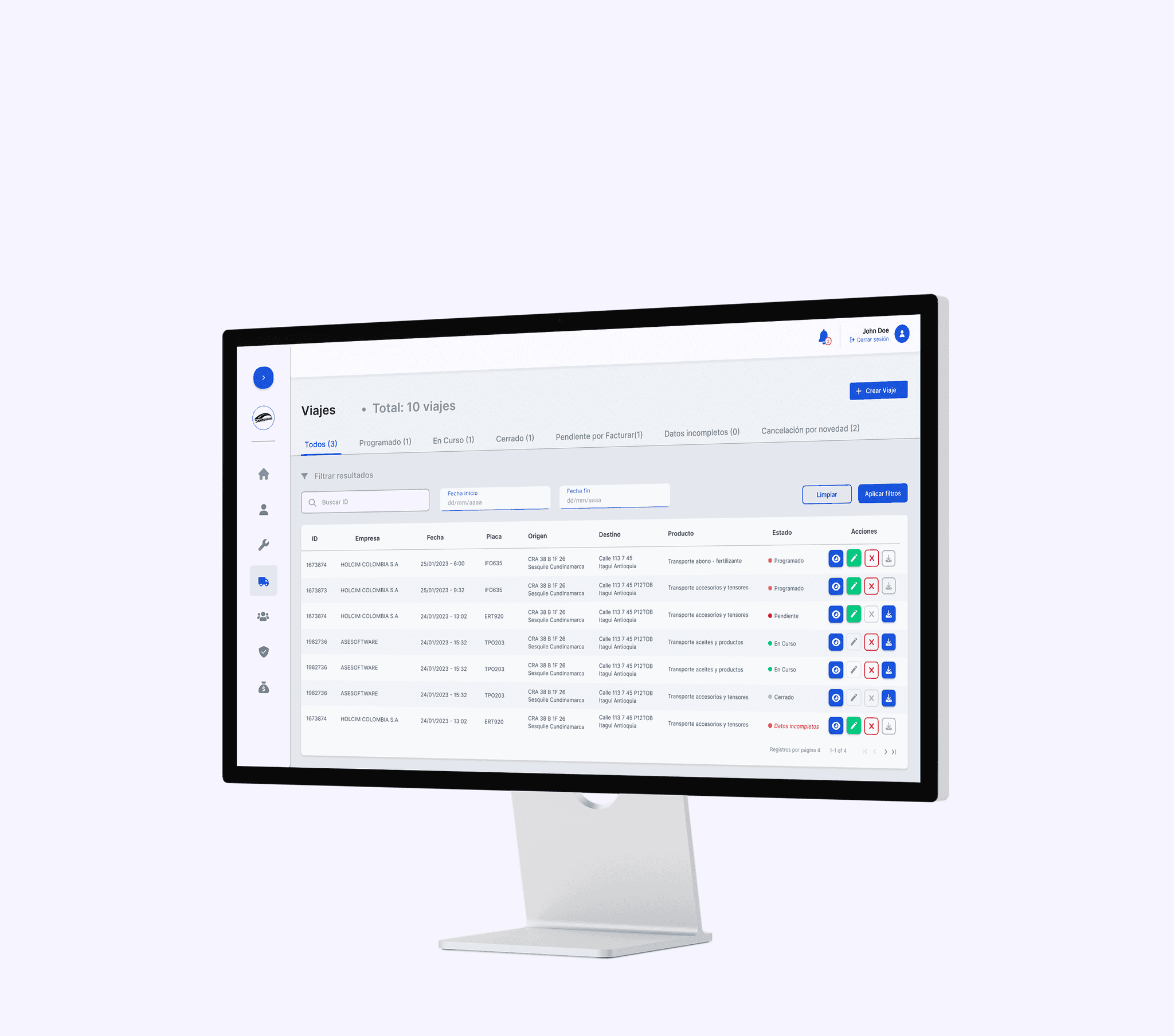
Designing the web platform for operations control and the mobile app that supports drivers through their trips.
Producing navigation flows, interactive prototypes and user stories, and collaborating daily with developers and business stakeholders.
I owned the core “trip lifecycle” journey end-to-end, from first mapping to detailed UI and specs.
Procces
1. Understanding Cargando
Mapped the full road freight logistics process using Design Thinking tools, from trip creation to closing and settlement.
Created an actors map to clarify roles across operations, administration, drivers and external regulatory entities.
Built a journey map to capture tasks, tools, documents and pain points at each step for both admins and drivers.
Documented how remesas, Ministry permits and trip insurance were requested, validated and stored.
Key learnings:
Compliance with transport regulation is core to the business and touches every trip.
Teams lacked a single source of truth for trip status and documentation.
Drivers needed guidance on documents and steps, not just visibility of assigned routes.
2. Mapping the Friction
The existing internal platform had performance issues and did not centralise all operational data, forcing parallel manual work.
Document handling was fragmented, with trip permits and insurance information scattered across systems and files.
Admin teams had to manually check and update trip information, increasing risk of omissions and delays.
Drivers depended on phone calls and informal channels to confirm what they needed to carry and which documents were valid.
3. Designing the New Journeys
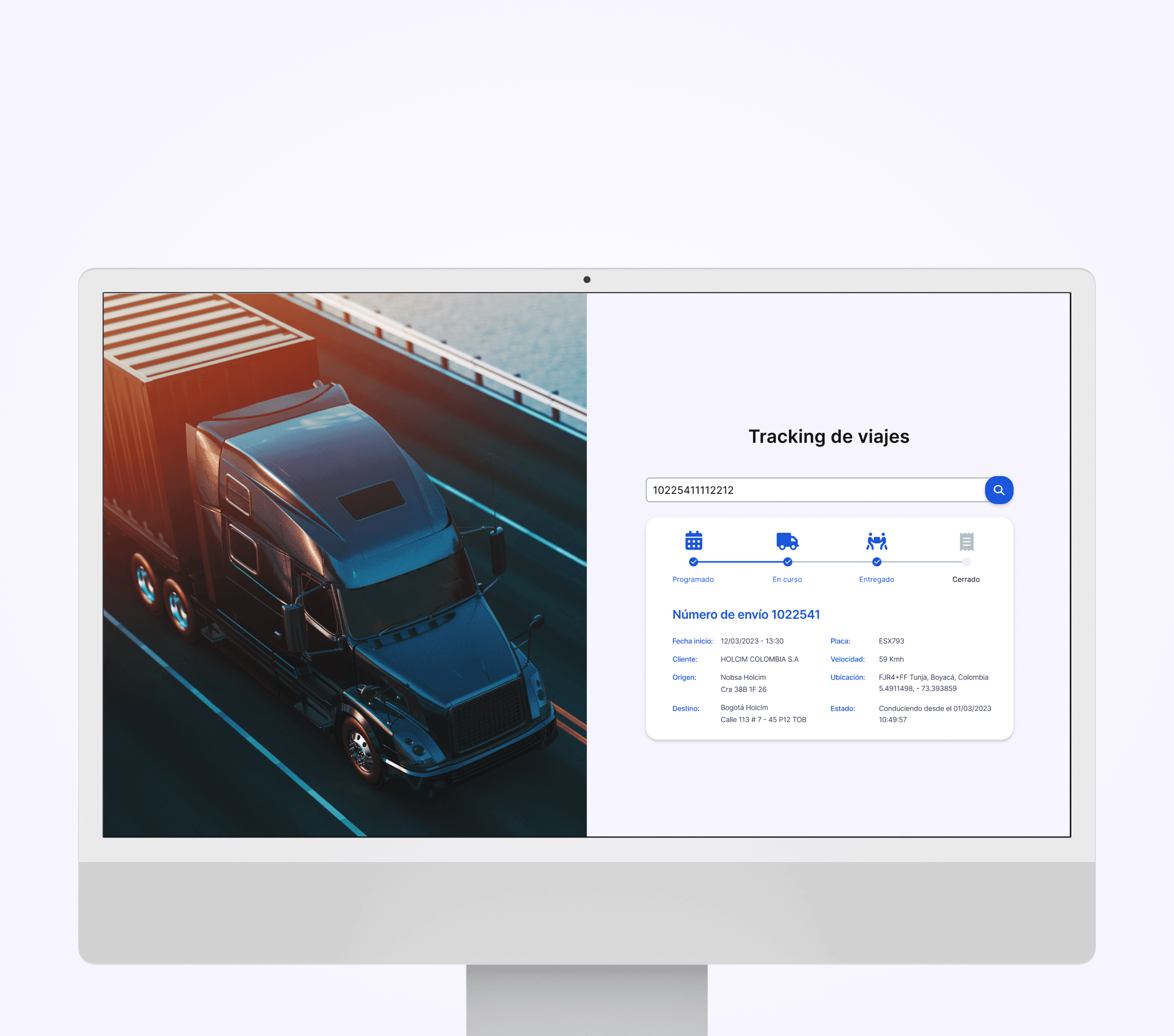
Defined navigation flows for a web platform that gives operations teams a consolidated view of trips, trucks, drivers and documents.
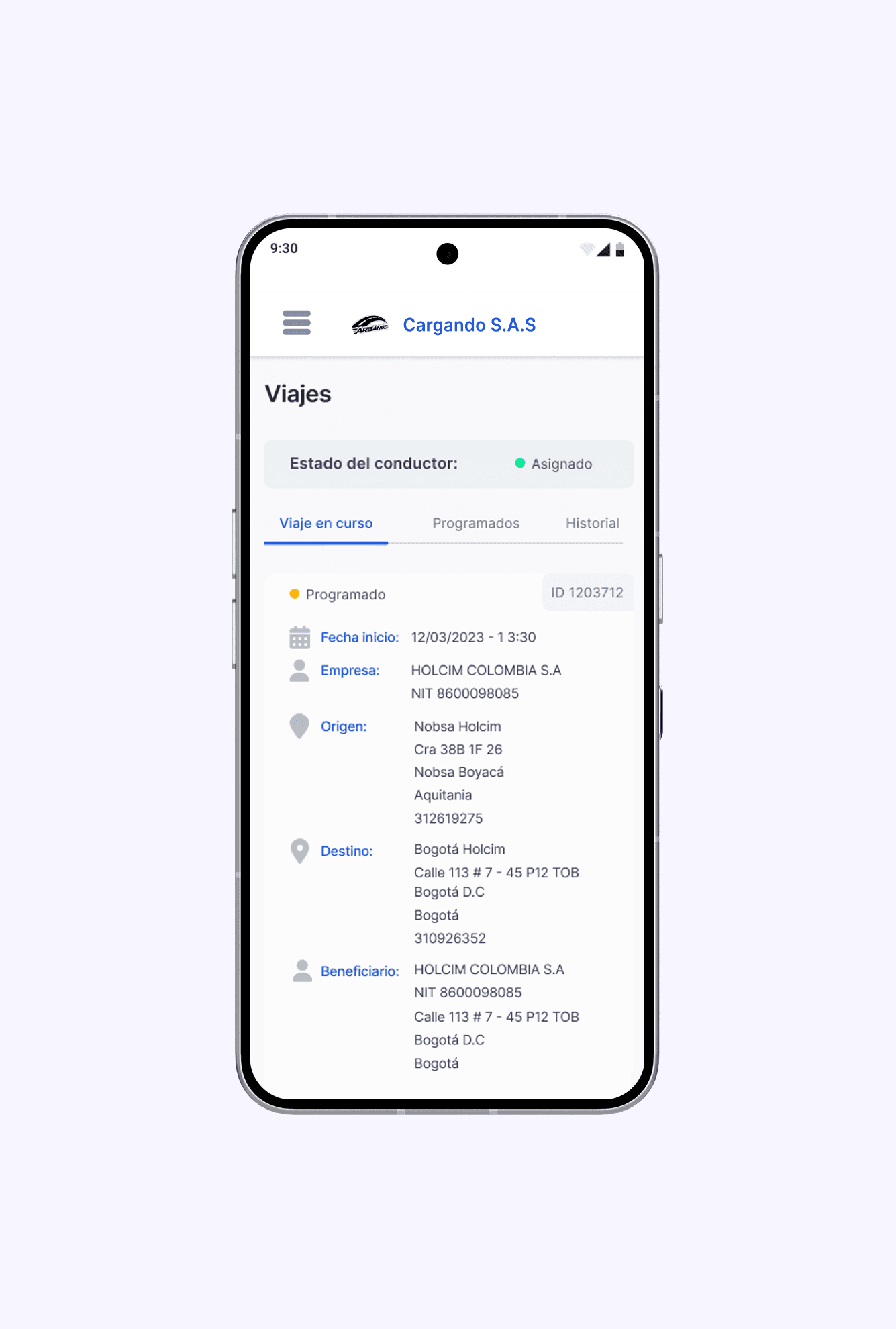
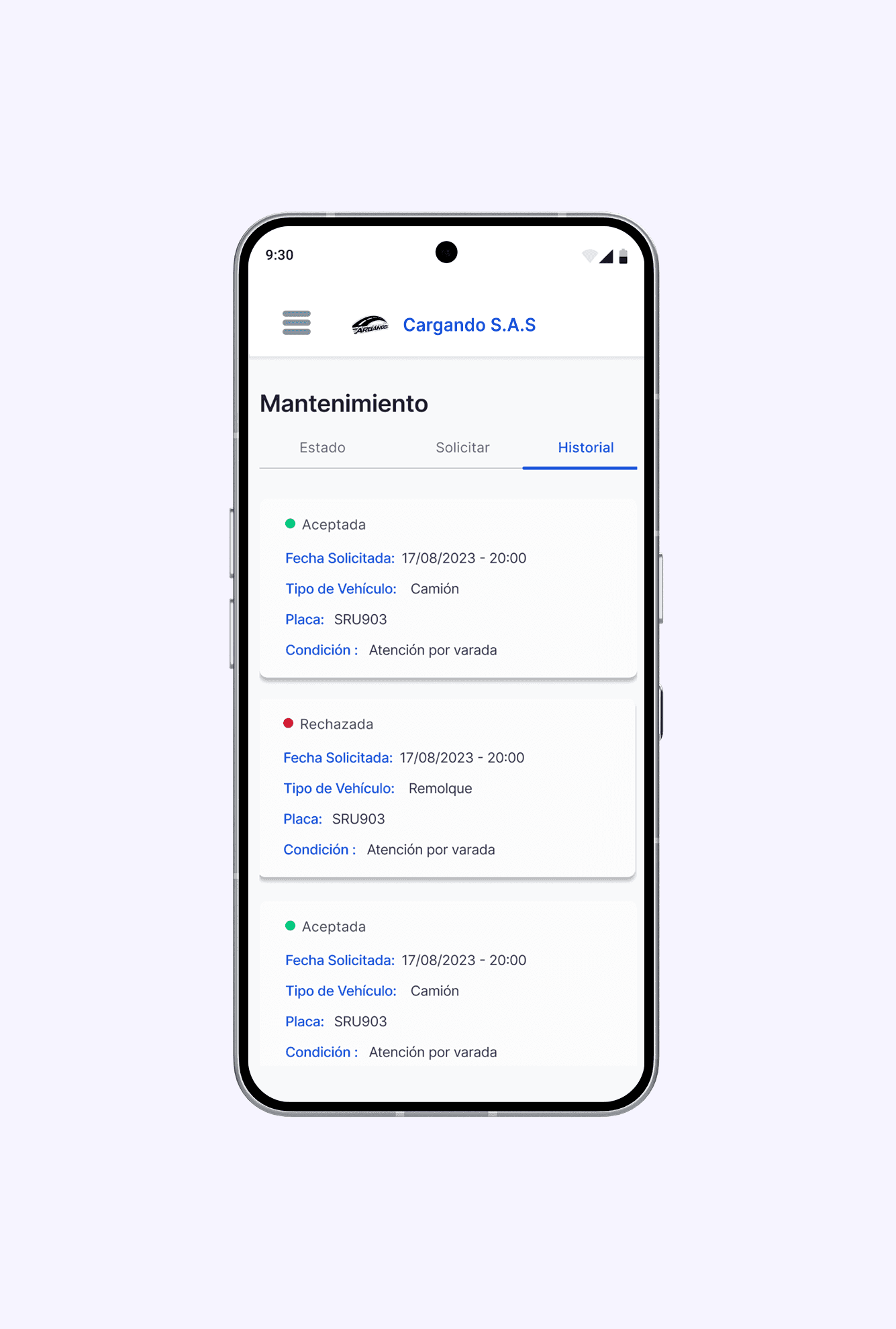
Designed a mobile app that supports drivers through each stage of the journey, surfacing required documents and key trip data.
Created interactive prototypes in Figma for core flows like creating a trip, assigning resources, uploading documents and closing a trip.
Produced user stories tied to screens and flows so development could run in sprints in parallel with design.
Strategic Design Decisions
Introduced a single “trip balance” view to centralise route, vehicle, driver, permit and insurance information, reducing the need to cross-check tools.
Replaced scattered manual document handling with digital transport documents inside the platform to reduce operational effort for admins and drivers.
Introduced driver-facing step-by-step screens so drivers know what to do and which documents to carry at each point of the journey.
Integrated flows with transport regulatory entities so permits and insurance can be managed in a more controlled and transparent way.
Replaced ad-hoc improvements with a structured set of user stories and flows, giving the client a roadmap for future iterations.
Outcomes
The new product reduced operational load for the administrative team by centralising data and simplifying routine updates.
Drivers gained a practical tool that accompanies them through each stage of their trips, instead of relying on calls and informal instructions.
Operations and regulatory processes became more intuitive and transparent, with clearer responsibilities for each actor.
Cargando now has a modern web and mobile platform as a foundation to keep improving its logistics operation across Colombia’s road network.